A Passenger Liner Lounge or a Shore-Side Casino?
Compare a passenger liner lounge with a shore-side casino by atmosphere, access, and schedule, then choose the setting that fits your evening.

The common mistake when choosing a passenger liner lounge or shore-side casino is to compare only the rooms and overlook the practical differences in access, schedule, and atmosphere. A lounge is part of the vessel’s shared spaces; a casino in a waterfront hotel is a separate venue that requires a shore visit. That distinction can shape the whole evening before you settle into a seat.
Imagine Mara, an invented traveler on a fictional coastal voyage from Hải Phòng. She has one free evening and is deciding between a liner lounge and a casino in a waterfront hotel during a later port call. She is interested in the setting, not in comparing games. Her decision turns on how much planning she wants and whether she would rather stay within the ship or spend part of the evening in town.
A liner lounge is part of the ship’s shared spaces
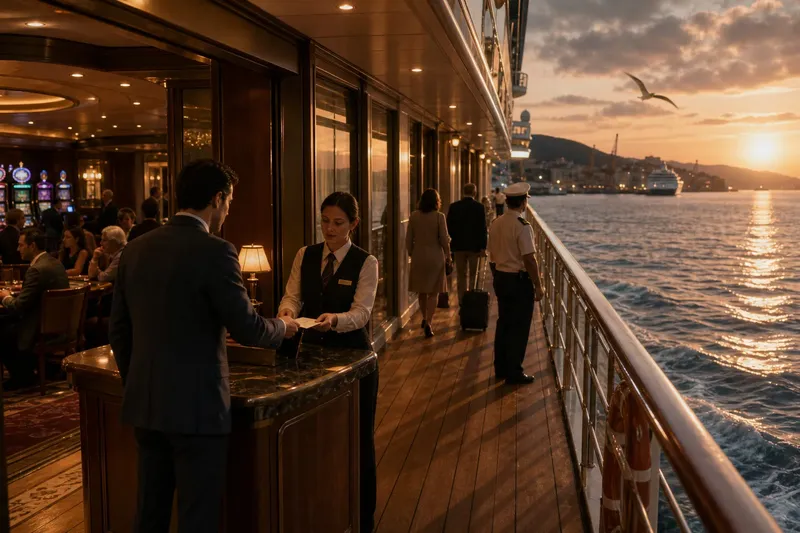
A passenger liner lounge sits among the vessel’s public areas, such as dining rooms, promenades, and observation windows. Its decor, seating, and view depend on the particular ship, but its defining feature is practical: it is inside the place where Mara is already staying.
She can move from dinner to the lounge without arranging transport or leaving the vessel. The view may change as the ship travels, while the lounge remains part of the same onboard environment. That can suit someone who wants a relaxed evening with minimal planning and easy access to other public spaces.
The trade-off is that the lounge shares the ship’s schedule and conditions. Announcements, meal times, weather, or onboard events may affect the mood. Mara can choose another public area, but the ship’s boundaries and timetable still shape her options.
A shore-side casino is a separate venue to plan around
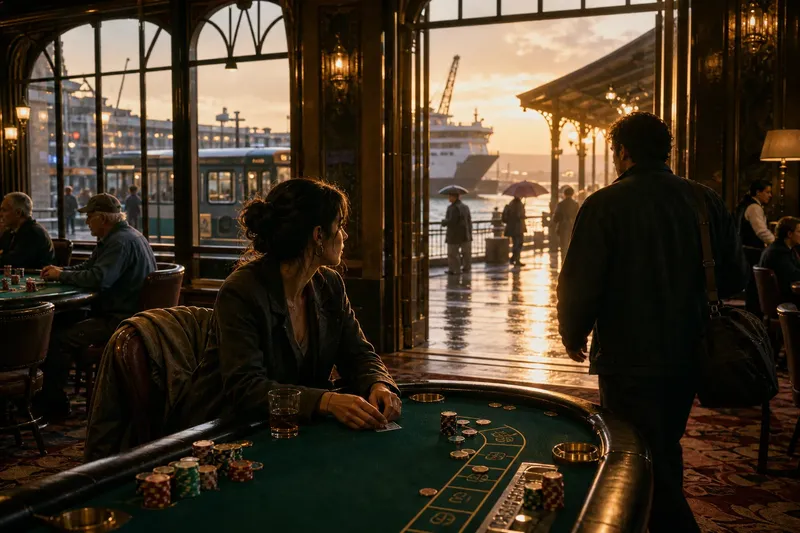
A casino in a waterfront hotel is a fixed location within the port city. Reaching it means leaving the ship, following a local route, and allowing time to return. The outing can include the city streets and hotel setting, rather than only the vessel’s interior.
That separation may appeal to someone who wants the evening to feel distinct from the voyage. It also adds decisions: how to get there, what access rules apply, and when to head back. Mara should check the ship’s return arrangements and any relevant local requirements before leaving, rather than assuming the venue is convenient simply because it is near the water.
Compare access, atmosphere, and schedule
A useful everyday analogy is reading on a train versus settling into a café. The train is already carrying you through a changing setting; the café is a separate place you choose to enter and leave. Neither is automatically better. The difference is how much of the evening you want to devote to getting there and settling in.
- Access: If the shipboard lounge is open to you and nearby, then staying aboard avoids a separate trip; if it is closed or crowded, then consider another onboard public space.
- Schedule: If the ship’s timetable leaves a comfortable window, then a shore visit may fit; if departure or return timing is uncertain, then stay aboard and confirm details with ship staff.
- Atmosphere: If you want the vessel and its changing views around you, then choose the lounge; if you want a hotel and city setting, then consider the shore-side venue.
- Effort: If you prefer not to arrange transport, then the lounge is the simpler option; if you welcome an outing, then check the local route and access conditions before going ashore.
- Flexibility: If you want to move between onboard dining and seating areas, then staying aboard keeps those choices close; if you want nearby city stops, then check what is accessible and allow time for each additional stop.
- Personal comfort: If the ship’s public spaces suit your pace, then remain aboard; if you would rather spend the evening in town, then plan the return before setting out.
Which setting fits the evening you want?
What makes a shipboard lounge different from a hotel casino?
The lounge is part of the vessel’s shared spaces and routine, while the hotel casino is a separate venue in the port city. Access and the surrounding atmosphere differ, even before considering what each place offers inside.
What should I check before leaving the ship?
Check the ship’s return arrangements, the route to the venue, its access rules, and any local requirements that apply. If any detail is unclear, ask ship staff or the venue before going ashore.
Which option involves less planning?
Staying aboard usually avoids arranging a separate trip, though the lounge still follows ship schedules and access rules. A shore visit requires a route and a plan to return, so it calls for more preparation.
Can I treat the lounge as a destination?
Yes, it can be the main place you choose to spend the evening. It remains part of the ship, however, rather than a separate address in the port city.
Mara’s choice shows the practical trade-off
Say Mara’s ship is due to leave the port later that evening, and she has confirmed that the waterfront hotel is accessible but still needs to allow time for the return. She first checks the ship’s schedule and asks staff about the return arrangements. Since she wants a quiet evening without organizing a trip, she chooses the lounge after dinner and spends the time moving between a window seat and the promenade. The expected result is an evening with minimal travel planning, though still shaped by the ship’s routine.
On a later port call, imagine she has a longer confirmed window and wants to spend time in the city. She checks the route and venue access, then leaves enough time for the return under the ship’s stated arrangements. The expected result is a more distinct outing, with the hotel and port city forming part of the evening; the trade-off is added planning and less time to spend aboard.
For a passenger liner lounge or shore-side casino, the useful question is not which room looks more appealing in isolation. Consider access, schedule, and the kind of surroundings you want, then choose the option whose practical demands suit your plans. If the ship’s timetable or local access rules are uncertain, resolve those details before leaving the vessel.