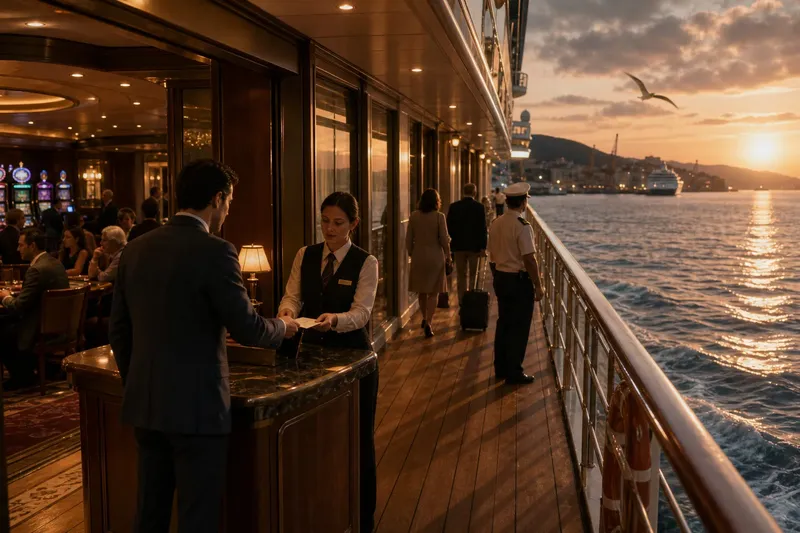
Why Port Cities Make Such Potent Casino Settings
Why port cities make potent casino settings: connect harbor details to character motives and create vivid fictional scenes without relying on nautical clichés.
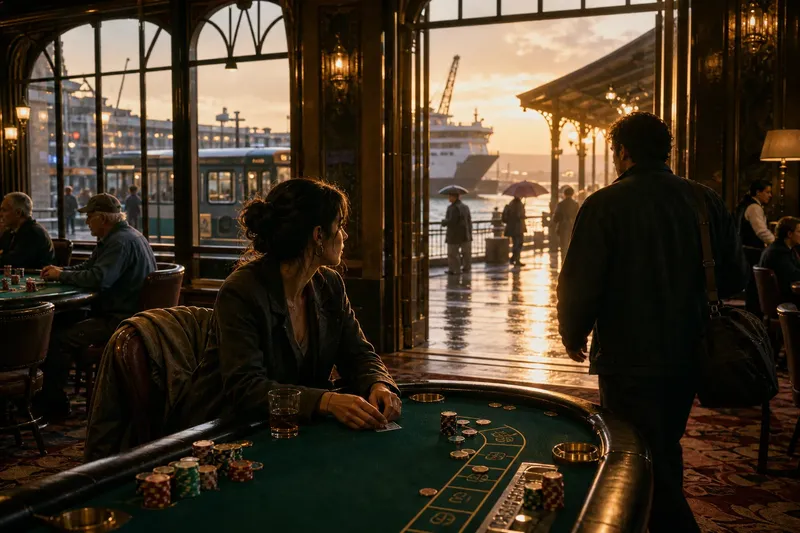
The easiest mistake in writing a port-city casino is to treat the harbor as decoration: add a ship’s horn, a wet quay, and a few unfamiliar accents, then call the place mysterious. That shortcut costs the scene its strongest asset: a believable connection between the room and the people whose attention is elsewhere. Port cities make potent casino settings when harbor life shapes what a character notices, wants, or fears.
This is a storytelling choice, not evidence about any real city or casino. A fictional venue can feel tied to its port even if no ship appears on the page. The useful question is what the setting changes for the characters, rather than how many nautical props can fit in the room.
Port-city casino settings gain force from character motives
A port offers a writer practical sources of tension: a late arrival, a shift ending, a meeting moved to another place, or a traveler weighing whether to stay. These details matter only when they connect to a person’s purpose. A visitor may want a quiet hour before meeting a relative; a local employee may be waiting for news that affects a conversation after work.
The casino adds a decision-making space, but the scene need not hinge on a win or loss. Ask what a character is prepared to risk socially or emotionally: speaking honestly, missing a meeting, or admitting that a plan has changed. The game can remain in the background while that choice drives the scene.
A departure can sharpen the moment without turning it into a grand symbol. If a character has to leave to catch a ferry, the choice to stay becomes visible and immediate. The clock matters because it presses on a specific relationship or plan, not because every port encounter must feel dramatic.
Choose harbor details that connect the room to the city
Specific details make a fictional setting convincing; a pile of nautical decorations can make it feel like a stage set. Choose details that have a practical effect on the scene: a bus pulling away outside, rain tapping at the entrance, or a message changing where two people will meet.
- Sound: If a harbor horn interrupts a conversation, let the characters react to it; if nobody notices, use a street sound that better reflects their attention.
- Timing: If a character checks a transit board or an arrival update, make the information alter their next choice; if it changes nothing, remove the check.
- Work: If a folded shift schedule or work jacket reveals a character’s routine, connect it to a decision; if it serves only as costume, give the detail a more personal purpose.
- Language: If characters speak differently, distinguish them through goals and knowledge; if accent is doing all the work, replace it with a meaningful choice or point of view.
- Thresholds: If a lobby faces a busy street or covered walkway, use the entrance for a meeting or interruption; if it has no bearing on the scene, focus on a more relevant feature.
- View: If someone looks toward the water, show what they expect or remember; if the view is merely scenic, leave it out.
One well-chosen detail can do more than a paragraph of general atmosphere. Think of it like a key on a ring: it earns its place by connecting to something beyond itself. A departure board that changes can disrupt an appointment; a coat left on a chair can suggest that someone expects to return.
Give every encounter a reason beyond the setting
People may share a port city without sharing the same plans. A visiting musician might be waiting for a colleague, while a bartender recognizes that a regular has gone quiet. A deckhand could be off duty and have no interest in discussing work. Their backgrounds do not need to turn them into a colorful crowd; their distinct needs give a meeting its shape.
Chance encounters feel credible when the story supplies a reason for the overlap: a shared contact, a recurring routine, or an appointment at the same venue. The port can make the meeting plausible, but the characters’ decisions make it matter. Avoid making unfamiliar speech or clothing a shortcut for danger or mystery.
Work through a fictional scene one choice at a time
Say you are writing an invented scene about Mara, who has received a message that her sister’s ship will arrive later than expected. Mara is in a casino near the waterfront and has two concrete options: wait for another message or go to a friend’s home across town. She notices a former colleague entering and asks whether the colleague knows why the arrival changed. The colleague says the sister asked to meet somewhere else; Mara leaves the table to confirm the new location. The observable result is that the game stops being her focus and the scene turns toward a conversation. The harbor detail matters because it changes Mara’s next action, not because it predicts what will happen.
A ticket or boarding pass can serve the same purpose, but it should not automatically stand for freedom or escape. Its meaning comes from the decision attached to it: a character might be eager to go, reluctant to leave, or using the departure as an excuse to postpone a difficult talk.
What should a port-city casino scene make clear?
Why do port cities suit stories about chance?
A port can bring different schedules and purposes into the same fictional setting, while a casino gives characters a place to make choices under pressure. The combination is useful when the writer connects those conditions to a specific motive rather than treating uncertainty as atmosphere alone.
Does a port-city casino story need ships?
No. A changed meeting time, a transit connection, or a traveler’s luggage can establish the setting without showing a vessel. Include a ship only if it affects what a character knows or does.
How can a writer make a fictional port feel specific?
Choose a few features that belong to the imagined place, such as a covered walkway, a bus route, or rain blowing in from the waterfront. Let a character notice each feature for a personal reason instead of presenting it as a tourist description.
Can atmosphere establish facts about a real casino?
No. A mood or fictional scene does not establish how a real venue operates or what its patrons do. If a story makes factual claims about an actual place, verify them with reliable, location-specific information.
Keep the port’s movement tied to a human decision
A strong port-city casino setting does not depend on a water view to carry the story. It makes a detail from the surrounding city relevant to someone’s next decision: stay, leave, wait, speak, or change plans. The arrivals and departures can frame the scene, but the characters decide what those events mean.
For a port-city casino story, start with a character’s unsettled plan and choose one detail that changes what they do. A delayed message, a revised meeting place, or a ticket in a pocket can provide that connection. The result is a scene that feels open to possibility without suggesting that the harbor—or the cards—controls its outcome.